What Soil Tests Measure—and What They Don’t Tell You About Phosphorus
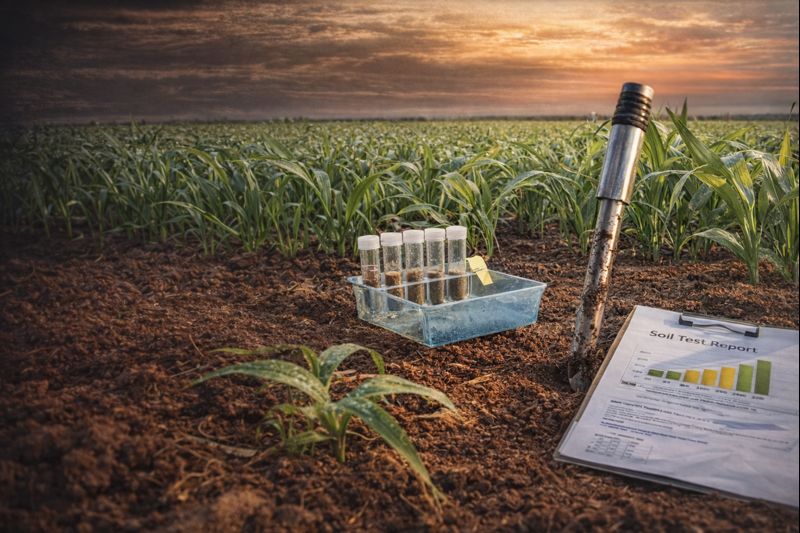
Soil tests are one of the most common tools used to guide phosphorus decisions. They play an important role in fertility planning—but they don’t tell the full story, especially when phosphorus prices are high and margins are tight.
Understanding what soil tests measure—and what they don’t—can help growers make better decisions about phosphorus efficiency, risk, and return on investment.
What soil tests actually measure
Most standard soil tests measure extractable phosphorus. This is the portion of phosphorus that can be chemically extracted from the soil under specific laboratory conditions. Extractable phosphorus provides a useful benchmark for comparing fields and guiding long-term fertility plans.
However, it does not measure:
• Total phosphorus present in the soil.
• How much phosphorus is chemically tied up.
• How much phosphorus is accessible to roots during the growing season.
In other words, soil tests measure potential, not performance.
Why extractable P isn’t the same as plant-available P
Once phosphorus is applied—or once it exists in the soil—it begins reacting with surrounding minerals. Calcium, iron, and aluminum quickly bind phosphorus into forms that are far less mobile and far less accessible to roots.
At the same time, early-season conditions often work against phosphorus uptake:
• Cool soils slow root growth.
• Residue limits soil warming.
• Young roots have limited reach.
As a result, a field can show a strong soil test value while still delivering less phosphorus to the crop than expected during critical early growth stages.
The misconception of “high-P soils”
One of the most common assumptions in fertility planning is that high soil-test phosphorus guarantees adequate crop nutrition. In reality, many high-P soils still respond to improved phosphorus availability.
Why?
• Much of the phosphorus in high-P soils exists in bound or immobile forms.
• Roots must physically intercept these forms to access small amounts.
• Early-season demand often outpaces root access.
This is why growers sometimes see yield or vigor responses in soils that already test “adequate” or “high” for phosphorus. Yield losses from phosphorus stress often occur early and quietly, before visible deficiency symptoms appear and before corrective action is possible.
What this means for phosphorus decisions today
In a high-cost environment, the goal isn’t simply maintaining a soil test number—it’s ensuring phosphorus is available when the crop needs it most.
Phosphorus efficiency focuses on:
• Improving early-season access.
• Reducing loss to chemical tie-up.
• Making better use of existing soil reserves.
This approach helps protect yield potential without relying solely on higher application rates.
Where NutriCharge fits—even in high-P soils
NutriCharge is designed to work through soil chemistry to improve phosphorus availability, not just increase phosphorus levels.
In high-P soils, NutriCharge helps:
• Improve access to existing, bound phosphorus.
• Protect newly applied phosphorus from rapid tie-up.
• Support early-season uptake when roots are limited.
This is why NutriCharge can deliver value even where soil tests already indicate adequate or high phosphorus levels. The response isn’t about adding more nutrients—it’s about improving access to what’s already there.
The takeaway
Soil tests are an important planning tool—but they don’t tell the whole phosphorus story. Phosphorus availability depends on chemistry, timing, and efficiency. Improving access—not just application—helps turn soil test numbers into yield potential.